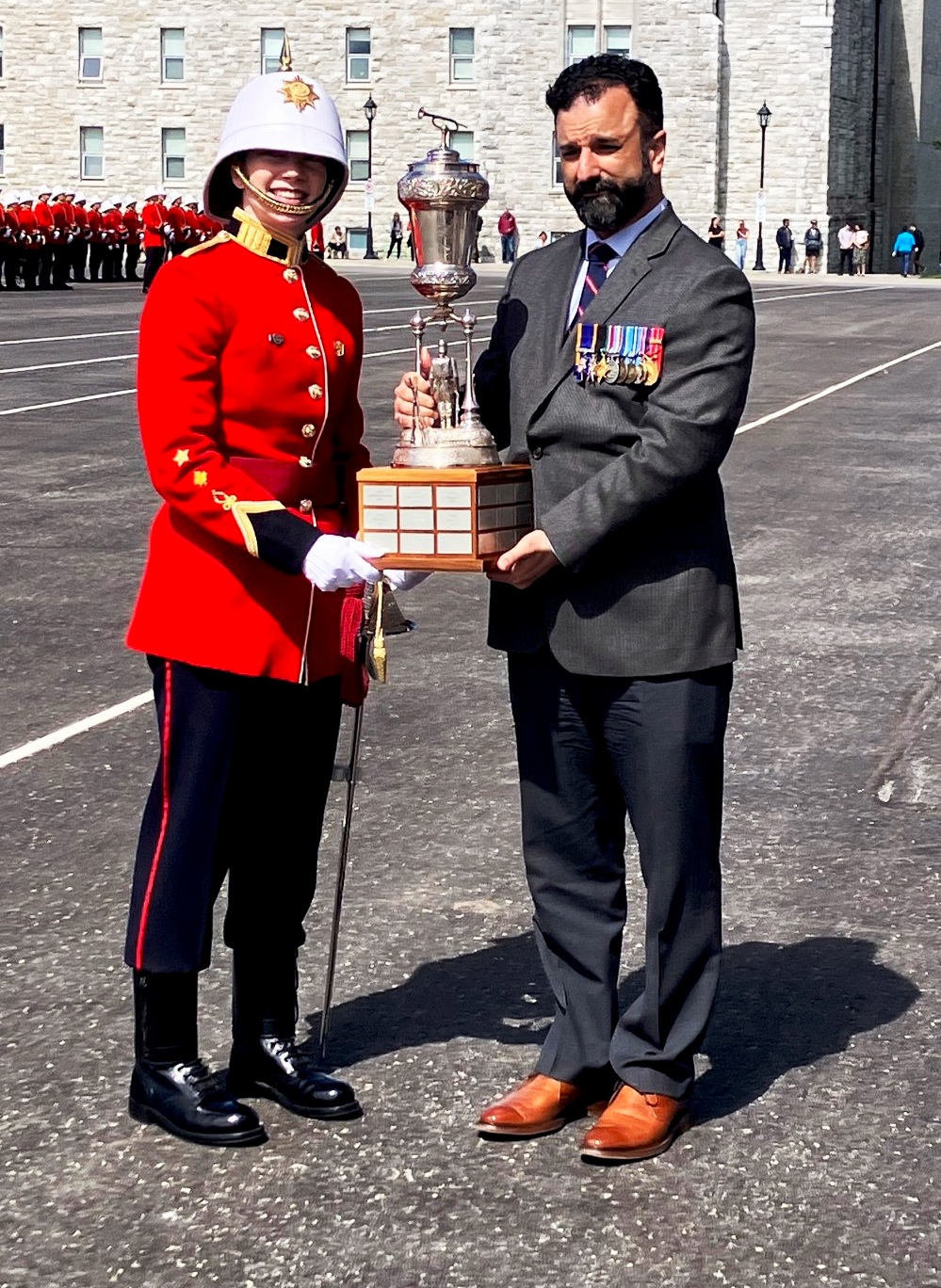
MGen John Arthur Stewart Trophy Winner for RMC Class of 2026
Published May 16, 2026

OCdt Emilie Brulé was chosen as this year's winner of the MGen John Arthur Stewart Trophy for the RMC Class of 2026. Sponsored by the Canadian Military Engineer Association, the trophy is awarded to the top Military Engineer cadet (Combat or Construction) in his/her graduating year.  Criteria include high standards of proficiency in each of the four components of the RMCC. (four interlocking pillars: Academics, Military, Physical Fitness and Bilingualism)

Bombs in Mailboxes

During the late 1950s and early 1960s, the Front de libération du Québec (FLQ) escalated the political violence in Quebec as it turned to bombings to advance its separatist cause. In the spring of 1963, the tempo of attacks increased sharply, and the Canadian Forces became involved. 

The BC Star Tragedy

On 23 July 1943, the RCAF marine vessel M427 “BC Star” embarked on a fateful journey that would become one of the most tragic incidents in Canadian military construction history. Departing from Bella Bella, BC, the 70-ton requisitioned seine fishing boat was bound for  Cape St. James in the Queen Charlotte Islands, carrying a crew of ten RCAF members, six personnel from No. 9 Construction and Maintenance Unit (9 CMU), and 43 tons of construction materials.

The North-West Staging Route

A Second World War Royal Canadian Air Force unit, No. 4 Construction and Maintenance Unit (CMU), was instrumental in developing the North-West Staging Route during the war. This was a vital air corridor connecting Canada to Alaska that was crucial for military operations. Established primarily to ferry aircraft, it enabled the efficient transportation of military material to support operations in the Pacific theatre and to aid the Soviet Union under Lend-Lease agreements.

Saint Barbara

The Canadian Military Engineers have no official patron saint, but Engineers frequently participate in celebrations honouring St. Barbara. Within military tradition, she is widely regarded as the patron saint of occupations connected to lightning, fire, and explosive forces - hazards that have long been central to the work of sappers, miners, and gunners. Many armies shaped by European military heritage incorporate St. Barbara into their branch customs. Her feast day on 4 December is commonly observed across artillery and engineer communities.