Every now and then, you come across an extraordinary story about a Canadian family's contribution to the Second World War effort. While it wasn't unusual for families to have more than one child serving overseas, having five sons and a daughter in uniform is truly remarkable!
Such was the incredible service of the Wanamaker family from Nipawin, Saskatchewan. Five brothers—William, Frederick, John, George, and Robert—all enlisted with the Royal Canadian Engineers in Europe. Even more amazing: four of the brothers served in the same unit (the 9th Field Squadron), while the fifth served with the 1st Canadian Division engineers. To top it off, their sister Doreen answered the call as well, serving in Canada with the Canadian Women's Army Corps (CWAC).
The Wanamaker Family
Wilfred Stanley Wanamaker and his wife, Anna Maria (née Bell), were originally from Ontario. After marrying, they headed west to Regina, where their first son, William James, was born in April 1915. The family lived in Flin Flon for a time before settling on a homestead near Nipawin.
In May 1944, the Prince Albert Daily Herald highlighted the family's service under the headline “Nipawin Has Six of Family in Services.” The article listed Corporal W. J. Wanamaker, Sapper John Wanamaker, Lance Corporal F. H. Wanamaker, Sapper R. F. Wanamaker, Sapper George Wanamaker, and Private Doreen Wanamaker.
Four Brothers in the Same Field Squadron
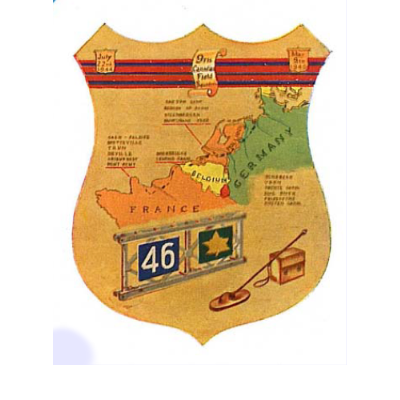
The 9th Field Company was formed at Camp Dundurn, Saskatchewan, in May 1941 as part of the 4th Canadian Infantry Division, and was recruited entirely from Saskatchewan. In September, the unit moved to Petawawa to join the 8th Field Company and 6th Field Park Company. In January 1942, when the division reorganized into the 4th Canadian Armoured Division, these companies became squadrons—with the 9th Field Squadron assigned to support the 10th Canadian Infantry Brigade.
In June 1942, the squadron set sail for Britain aboard the Duchess of York. Nearly two years of intensive training followed across Surrey, Hampshire, and Sussex, focusing on mine warfare, demolitions, road construction, assault crossings, and Bailey bridging.
After landing in France in July 1944, the squadron supported the division through the Battle of Normandy and the closing of the Falaise Gap. Their work clearing mines, repairing roads, and building bridges carried them across the Seine, through Belgium and the Netherlands, and into Germany. It was dangerous and demanding work, frequently carried out under direct enemy fire or in areas heavily booby-trapped by retreating forces.
Four of the Wanamaker brothers—Bill, Fred, John, and George—served side-by-side in the 9th Field Squadron. There is no mention of this in the unit's War Diary.
Corporal William James “Bill” Wanamaker
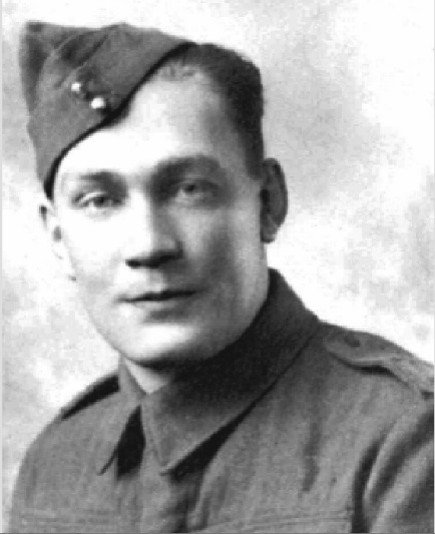 Corporal William James “Bill” Wanamaker, was born in Regina on 10 April 1915. He was living in Pas Trail, Saskatchewan, when he enlisted in Nipawin on 17 June 1941 with Regimental Number L56820. He stated he was married and working as a farmer. He was assigned to the 9th Field Company in Dundurn. As noted above, he embarked for the UK the following June.
The 4th Canadian Armoured Division had landed in France in July 1944. By late August, they were completing its operations in Normandy and beginning the pursuit of German forces withdrawing eastward after the fighting around the Falaise Pocket.
According to the squadron's war diary, 23 August was rainy, and the unit's personnel were engaged in route-clearance duties. Although the unit's War Diary does not specifically record the incident, Bill was seriously wounded by a booby trap that morning. His personnel file records that he died of wounds later that day. He was 29 years old and left behind his wife, Kate, and three young children.
Corporal William James “Bill” Wanamaker is buried in Bretteville-sur-Laize Canadian War Cemetery, Calvados, France.
Corporal Frederick Hamilton Wanamaker
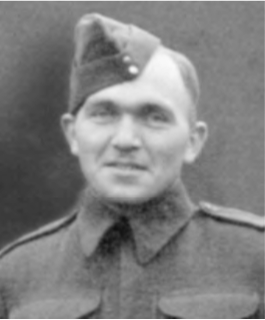
Frederick Hamilton Wanamaker, born in Regina on 23 January 1918. He joined the Army in 1941 and served with 9th Field Squadron until 1945. Frederick returned to Canada in December 1945, reportedly aboard the Queen Elizabeth, landing in New York and travelling to Prince Albert by train. He was a Corporal by that time.
Fred died in Flin Flon on 2 September 1973 at the age of 55.
Lance Corporal John Rodney Wanamaker
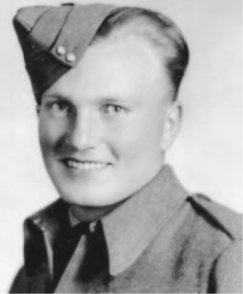
John Rodney Wanamaker, served with the same squadron from 1941 until 1946, ultimately attaining the rank of Lance Corporal. The closeness of John's service number to William's is noteworthy. Their numbers, L56838 and L56820 respectively, differ by only eighteen, suggesting they likely enlisted on the same day. They would have been together through Dundurn, Petawawa and the UK. John would have also served in France, Belgium, the Netherlands and Germany with his brothers. John remained in military service until 1946.
Before he enlisted, John ran John’s Groceries in Nipawin. He handed management of the store over to his brother Gordon, who had been working there. After the war, his ties remained strong in the Nipawin region. He was a member of The Royal Canadian Legion Nipawin Branch 120. He died 17 October 2009 at the age of 89.
Sapper George Edward Wanamaker
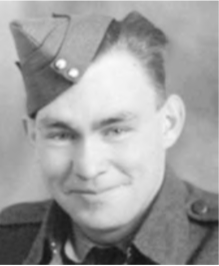
George Edward Wanamaker, born on 23 September 1919, enlisted in 1942 and served as a Sapper with the RCE until 1945. On 16 August 1944, the Prince Albert Daily Herald reported that Sapper George Edward Wanamaker had been injured overseas.
George died on 1 March 1999 at the age of 80.
Sapper Robert Francis “Bob” Wanamaker
The youngest of the five engineer brothers was Robert Francis “Bob” Wanamaker, born in Regina in 1926 and grew up on the family homestead near Nipiwan. According to his obituary, Bob enlisted in the Canadian Army in Nipiwan in 1942. He served during the Second World War with the Royal Canadian Engineers of the 1st Canadian Division in Northwest Europe.
Bob rejoined the Army during the Korean War as a Gunner in the Royal Canadian Artillery and served in Korea before being released in 1952. He then moved the Crieghton and worked as a miner in Flin Flon, Manitoba, for about 35 years. He retired in Ladysmith, British Columbia, where he enjoyed golfing and gardening. Bob died in Victoria on 30 January 1999, survived by his wife, Helen, four daughters, grandchildren and a great-granddaughter.
Private Doreen May Wanamaker
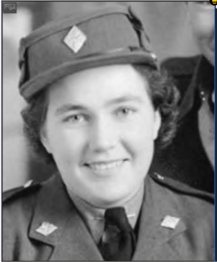
Doreen was born in Regina in 1924. After five of her brothers volunteered, Doreen enlisted as soon as she came of age, joining the Canadian Women's Army Corps (CWAC). She completed basic training in Vermilion, Alberta, and served in Maple Creek, Halifax, and Regina, working in a clerical unit processing discharge papers. Though she volunteered for overseas deployment, the war ended before she could be sent.
On discharge in 1945, Doreen took an Army-sponsored hairdressing course and married Covert William Armsworthy in 1947. They settled in Flin Flon (1948) and later Snow Lake (1958), where they raised four children. Doreen was a devoted member of Snow Lake Legion Branch 241 for 17 years before passing away in November 2004..