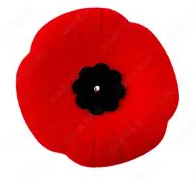
Every November, some 20 million Canadians wear a red poppy to honour those who sacrificed their lives in military service. Few know that Canadian Military Engineer Brigadier James L. Melville CBE, MC, ED, ADC played an important role in establishing the poppy tradition in Canada and ensuring it would also help those who returned from war. His story links the remembrance of the fallen with the welfare of surviving veterans.
James Melville was commissioned in the Canadian Engineers in the Non-Permanent Active Militia in 1916. He served overseas during the First World War in field and staff appointments. During the Second World War, he held senior engineering appointments, including Chief Engineer of the First Canadian Army. In 1943, he became chairman of the Canadian Pension Commission, a position he held for fifteen years. Melville also served as the first Colonel Commandant of the Corps of Royal Canadian Engineers.
The Remembrance poppy originated on the battlefields of the First World War. The red Corn Poppies that flourished among the devastated fields and soldiers’ graves of France and Belgium became a powerful symbol of sacrifice. Canadian military physician Lieutenant-Colonel John McCrae captured this image in his famous 1915 poem, In Flanders Fields.
Moina Michael, an American professor and humanitarian, conceived the idea of using poppies as a symbol of remembrance for those who served in the First World War. She promoted wearing an artificial poppy in the United States to remember them. The French humanitarian Anna Guérin later advanced this movement internationally. In 1921, she helped persuade Canada’s Great War Veterans’ Association (the predecessor of the Royal Canadian Legion) to adopt the poppy as a remembrance emblem.
Melville’s contribution helped establish a lasting Canadian manufacturing and distribution arrangement that connected the poppy with practical assistance for veterans. After returning from the First World War, he became involved in programs to rehabilitate and employ disabled former servicemen. He recognized that producing artificial poppies could give veterans meaningful work. Melville secured the Canadian manufacturing rights for the poppy and established workshops for this purpose. He insisted the campaign operate as a non-profit, with proceeds supporting veterans and their dependants. This gave the poppy a dual purpose: remembering those who had died and assisting those who had survived.
About 20 million Canadian poppies are produced each year. They were manufactured through Vetcraft workshops in Toronto and Montreal until 1996, when the Royal Canadian Legion contracted production to a private Canadian company under Legion supervision.
The humble red poppy is not just a symbol of remembrance; it also represents a commitment to care for those who have borne the consequences of war. Brigadier Melville’s early contributions to the poppy campaign remain an enduring part of this Canadian military heritage.